


Quick Summary
- Inflation is the general rise in prices over time. Example: Bread increases from KSh 60 to KSh 70.
- It reduces the purchasing power of money. Example: KSh 1,000 buys fewer groceries than last year.
- It affects everyday expenses. Example: Fuel, rent, and food become more expensive.
- Higher business costs often lead to higher prices. Example: A restaurant raises meal prices after cooking gas costs increase.
- Supply shortages can push prices up. Example: A drought makes maize flour more expensive.
- A weaker currency can increase import costs. Example: Imported smartphones become more expensive.
- Inflation impacts savings. Example: KSh 100,000 buys less after several years.
- Borrowing costs may change with inflation. Example: Loan interest rates increase.
- Not everyone feels inflation the same way. Example: A commuter notices fuel costs more than school fees.
- Good budgeting helps manage inflation. Example: Comparing supermarket prices saves money.
Inflation affects almost everyone, whether you follow financial news or not. One week you comfortably buy groceries with KSh 2,000. A few months later, you walk out of the supermarket with fewer items, yet your receipt shows the same amount—or even more.
Many Kenyans have experienced this without immediately connecting it to one economic term: inflation.
The word appears regularly in Central Bank reports, government budget discussions, and business news. Yet for many people, it still feels like technical language reserved for economists. In reality, inflation is something households, businesses, farmers, employees, and investors deal with almost every day.
What Is Inflation?
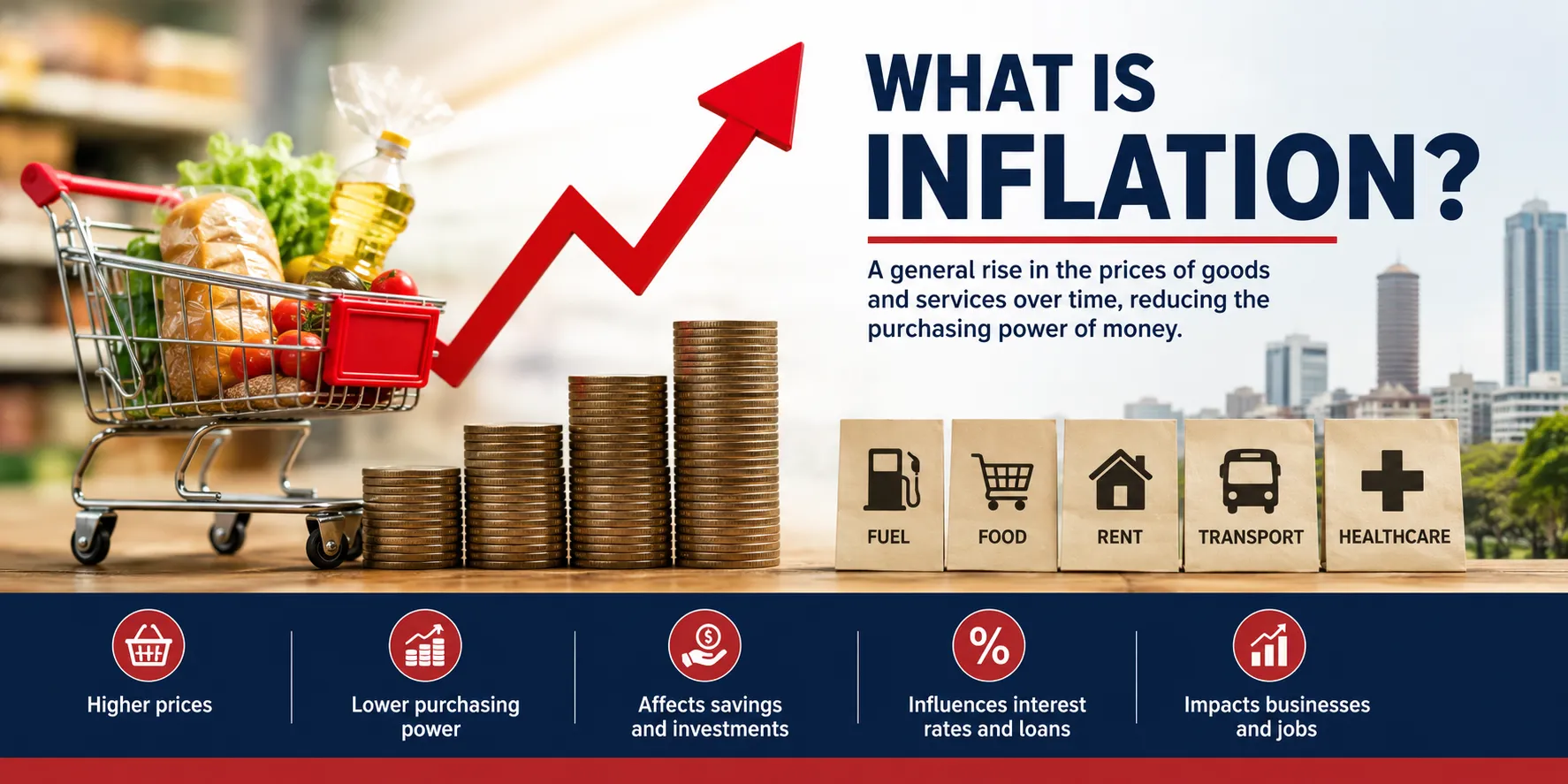
Inflation simply means a general increase in the prices of goods and services over time. As prices rise, the purchasing power of money falls. In other words, the same amount of money buys fewer goods than it did before.
Imagine buying a loaf of bread for KSh 60 last year. If today the same loaf costs KSh 70, while your salary has not changed, your money has become less powerful.
The key point is that inflation is not about one product becoming expensive. It refers to a broad rise in prices across many parts of the economy.
Economists usually measure inflation by tracking the prices of a basket of commonly purchased goods and services over time. These include food, transport, housing, healthcare, education, fuel, and many everyday necessities.
Why Inflation Matters
Inflation is more than a headline figure announced every month. It quietly shapes financial decisions across the country.
For households, it determines how far salaries stretch.
For businesses, it influences production costs, pricing decisions, and profits.
For investors, inflation affects the real value of returns.
For borrowers and savers, it changes the true cost of money.
A difference of just a few percentage points may not sound dramatic, but over several years it can significantly reduce purchasing power.
That explains why governments and central banks monitor inflation closely.
Practical Breakdown
1. Inflation Reduces Purchasing Power
This is the effect most people notice first.
Suppose your monthly household budget is KSh 50,000.
A year later, food prices, electricity bills, cooking gas, transport, and school expenses all rise by around 8%, but your income remains unchanged.
Without earning more, you may have to:
- Buy smaller quantities
- Delay non-essential purchases
- Reduce savings
- Look for cheaper alternatives
In practice, many families don't calculate inflation percentages. They simply notice that shopping bags keep getting lighter.
2. Why Prices Rise
Inflation does not have a single cause.
Several factors can push prices upward at the same time.
Higher Production Costs
If fuel becomes more expensive, transporting goods costs more.
Manufacturers may also face higher electricity bills or more expensive imported raw materials.
Eventually, those costs often reach consumers.
A packet of milk may cost more not because dairy farmers suddenly became wealthier, but because transport, packaging, processing, and distribution all became more expensive.
Strong Consumer Demand
Sometimes people have more money available to spend.
Businesses may struggle to meet growing demand.
When more buyers compete for limited products, prices often increase.
This commonly happens during festive seasons when demand rises sharply.
Supply Problems
Poor weather, floods, drought, political instability, or global conflicts can interrupt supplies.
Kenya has experienced this several times.
When harvests decline because of prolonged drought, food prices usually increase.
Likewise, disruptions in international shipping can make imported products more expensive.
Exchange Rate Movements
Kenya imports fuel, machinery, pharmaceuticals, electronics, and many industrial inputs.
If the Kenya shilling weakens against major foreign currencies, imported goods generally become more expensive.
Businesses often pass part of those additional costs to customers.
3. Inflation Affects Different People Differently
Not everyone experiences inflation in exactly the same way.
A university student living in Nairobi may spend heavily on rent and transport.
A farmer in Eldoret may feel fertilizer costs more than transport.
A retiree may notice rising healthcare expenses more than fuel prices.
Official inflation provides a national average, but every household has its own "personal inflation rate" depending on what it buys most frequently.
4. Businesses Must Adapt
Business owners cannot ignore inflation.
A restaurant paying more for cooking oil, vegetables, gas, and electricity has several options.
It can:
- Increase menu prices
- Reduce portion sizes
- Improve efficiency
- Negotiate better supplier prices
- Accept lower profit margins
Many businesses combine several of these approaches.
Customers sometimes notice subtle changes before they notice higher prices.
Portions become slightly smaller.
Packaging changes.
Free extras disappear.
Operating hours become shorter.
These are often responses to inflation rather than attempts to increase profits unfairly.
5. Inflation Can Affect Savings
Suppose you keep KSh 100,000 in cash for several years without earning meaningful interest.
If prices rise steadily during that period, your money buys less than it once did.
The amount in your account remains the same.
Its purchasing power does not.
That is one reason many people consider savings accounts, money market funds, government securities, or other investments that may help preserve value over time.
The right choice depends on individual financial goals and risk tolerance.
6. Inflation Also Influences Interest Rates
Central banks often adjust interest rates when inflation becomes too high.
Higher interest rates generally make borrowing more expensive.
That can slow spending and investment, helping reduce inflation over time.
On the other hand, lower interest rates may encourage borrowing and economic activity when inflation is under control.
These decisions affect mortgage repayments, business loans, personal credit, and even returns on some savings products.
Reality Check
Economic textbooks sometimes describe inflation as a manageable rise in prices that supports healthy economic growth.
Life on the ground is often more complicated.
A family whose salary has remained unchanged may not care whether inflation is described as moderate or temporary. What matters is whether school fees, rent, and food have become harder to afford.
Businesses face similar challenges.
Passing every additional cost to customers is rarely possible. Buyers have limits, especially during periods when incomes are under pressure.
There is another misconception worth clearing up.
Many people assume inflation means every price rises equally.
That rarely happens.
Food prices may climb sharply while clothing remains relatively stable.
Fuel might become cheaper for several months even as rent continues increasing.
Inflation moves unevenly across different sectors.
Practical Takeaways
You cannot control inflation, but you can make decisions that reduce its impact.
- Review your household budget regularly instead of relying on last year's spending patterns.
- Compare prices before making major purchases.
- Build an emergency fund for unexpected increases in living costs.
- Avoid unnecessary debt with variable interest rates if borrowing costs are rising.
- Look for opportunities to increase income through additional skills or side businesses.
- If you own a business, monitor costs frequently instead of waiting until profits disappear.
- Consider whether your savings are earning enough to help offset inflation over the long term.
Small financial adjustments made consistently often matter more than dramatic changes made once.
Common Questions and Misconceptions
Is inflation always bad?
Not necessarily.
Low and stable inflation is generally considered a normal part of a growing economy.
Problems usually arise when inflation becomes very high or unpredictable.
Does inflation mean every product becomes expensive?
No.
Some prices rise while others remain stable or even fall.
Inflation measures overall price movements across many goods and services.
Can salaries keep up with inflation?
Sometimes they do.
Sometimes they don't.
If wages grow faster than inflation, purchasing power improves.
If wages lag behind rising prices, households effectively become poorer despite earning the same amount.
Does inflation only affect consumers?
No.
Businesses, investors, lenders, borrowers, farmers, employers, and governments all feel its effects in different ways.
Can inflation disappear completely?
Modern economies usually experience some level of inflation.
The objective is generally to keep it stable and predictable rather than eliminating it altogether.
Final Thoughts
Inflation may sound like an economic statistic discussed in boardrooms and policy meetings, but its real impact is felt in supermarket aisles, fuel stations, rental agreements, and household budgets across Kenya.
Understanding inflation does not require an economics degree. It starts with recognizing why money sometimes buys less than it used to and how that affects everyday decisions.
While no individual can control the direction of prices, informed choices—whether budgeting carefully, reviewing business costs, or planning long-term savings—can make households and businesses more resilient when living costs change. That practical understanding is often far more valuable than simply knowing the latest inflation rate.


