


Quick Summary
- SACCO elections choose leaders – Members elect directors and committees to guide the SACCO.
Example: Members vote for a new board member. - One member, one vote principle applies – Voting power is usually equal regardless of savings amount.
Example: KSh 50,000 saver and KSh 5 million saver each get one vote. - Only eligible members can vote – Members must meet SACCO requirements before voting.
Example: A new member may wait before gaining voting rights. - Active membership matters – Members should maintain accounts and meet SACCO rules.
Example: A dormant account holder may not vote. - Not every member can contest – Candidates must meet qualifications and integrity requirements.
Example: A director candidate must have a clean record. - Nominations verify candidates – SACCO checks whether applicants qualify before elections.
Example: A nominee must meet education requirements. - AGM elections follow procedures – Meetings start with reports before voting begins.
Example: Members review financial statements before choosing leaders. - Members evaluate leaders before voting – Reports help members judge performance.
Example: Poor financial results may influence voting decisions. - Candidates explain their vision – Contestants tell members what they plan to do.
Example: A candidate promises better member services. - Voting methods differ – SACCOs may use ballots, cards, hands, or electronic systems.
Example: Members tick their preferred candidate on a ballot paper. - Directors retire in stages – Only some board seats are contested each year.
Example: Three directors retire while others continue. - Staggered terms provide stability – Experienced leaders remain while new ones join.
Example: An ongoing building project continues smoothly. - The board provides strategic leadership – Directors set direction, policies, and oversight.
Example: The board approves a new loan policy. - Management runs daily operations – CEO and staff handle everyday activities.
Example: Staff process member loan applications. - Members should vote wisely – Popularity alone should not determine choices.
Example: Choose an honest leader over a famous person. - Integrity matters in leadership – Leaders should protect members' interests.
Example: A director avoids conflicts of interest. - Elections are not about personal favors – Leaders should serve all members equally.
Example: A director cannot give friends special treatment. - Common voting myths are incorrect – More savings do not mean more votes.
Example: A millionaire member still has one vote. - Board members follow the same rules – Directors do not automatically get special loans.
Example: A director must meet normal loan requirements. - Age alone does not determine leadership – Qualifications and rules matter.
Example: A young qualified member can contest. - Active AGM participation strengthens SACCOs – Members help improve governance.
Example: Asking questions about finances improves accountability. - Skipping AGMs reduces member influence – Important decisions may happen without your input.
Example: Others choose leaders when you stay away. - Good elections support better SACCO performance – Strong leaders protect members' savings and growth.
Example: A capable board approves responsible investments. - Members should look beyond campaign promises – Judge candidates by actions and experience.
Example: Check past leadership performance before voting.
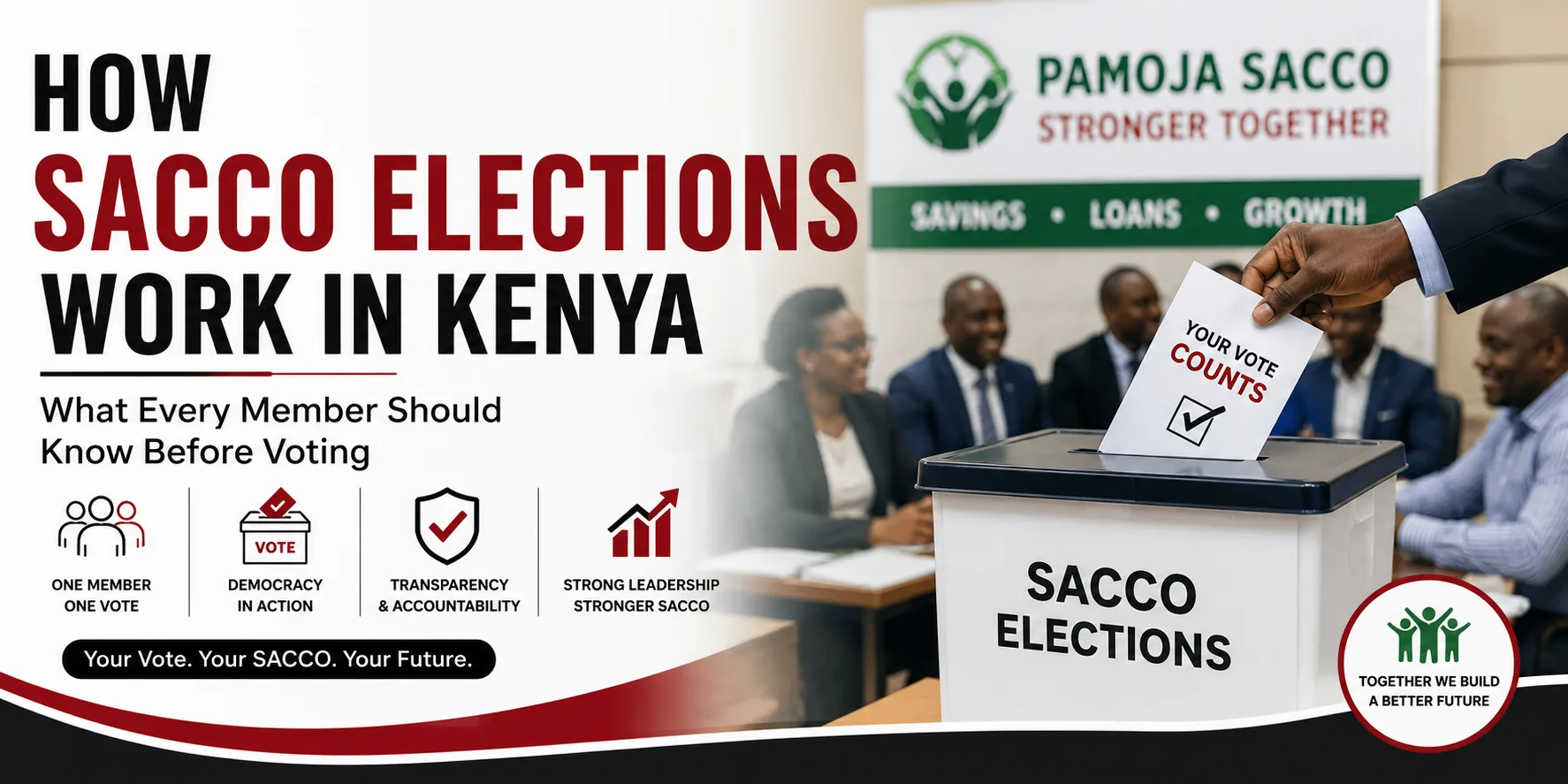
Have you ever attended a SACCO Annual General Meeting (AGM) expecting a quick vote, only to find long speeches, nominations from the floor, and heated debates over who should lead?
That experience is common across many Kenyan SACCOs. For some members, election day is the only time they actively participate in the affairs of their cooperative. Others simply raise their hands when everyone else does, without fully understanding what they are voting for.
Yet the people elected that day will influence decisions on loans, savings products, investments, dividends, governance, and even the future direction of the SACCO.
Knowing how SACCO elections work helps members vote wisely and hold leaders accountable. Whether you are joining your first AGM or thinking about contesting for a leadership position, understanding the process makes a real difference.
What Are SACCO Elections?
SACCO elections are the process through which members choose individuals to serve on the Board of Directors or other governance committees.
Unlike private companies where shareholders vote based on the number of shares they own, most Kenyan SACCOs follow the cooperative principle of one member, one vote. A member with KSh 50,000 in deposits normally has the same voting power as someone with KSh 5 million, provided both meet the membership requirements.
The purpose is simple: leadership should represent members rather than wealth.
That principle is one reason cooperative societies remain different from ordinary businesses.
1. Who Is Allowed to Vote?
Voting rights usually belong to active members.
Although every SACCO has its own bylaws, members generally must:
- Be fully registered
- Meet minimum membership requirements
- Have no disqualifying disciplinary issues
- Attend the AGM where voting takes place (unless electronic or delegate voting is allowed)
Some SACCOs also require members to have maintained active accounts for a specified period before becoming eligible to vote.
In practice, many first-time members assume registration automatically qualifies them for voting. They later discover they joined too close to the AGM or had not completed all membership requirements.
Reading the AGM notice carefully avoids surprises.
2. Who Can Contest for Leadership?
Not every member automatically qualifies to become a director.
Most SACCOs require candidates to:
- Meet educational qualifications
- Have good financial standing
- Be active members
- Have no criminal convictions involving dishonesty
- Meet integrity requirements under Kenyan law
- Comply with the SACCO's bylaws
Deposit-taking SACCOs regulated by the Sacco Societies Regulatory Authority often have additional governance and "fit and proper" requirements for board members.
Experience in finance, management, law, education, agriculture, or business can strengthen a candidate's profile, although requirements differ from one SACCO to another.
3. How Candidates Are Nominated
Before election day, a nominations committee may invite interested members to submit applications.
The committee verifies whether applicants meet the eligibility criteria before publishing the final list of candidates.
Some SACCOs also allow nominations from the floor during the AGM, depending on their bylaws.
Members should not assume every name appearing during discussions automatically qualifies for election.
The nomination stage helps prevent leadership disputes later.
4. What Happens During the Election?
Election procedures vary slightly between SACCOs, but a typical AGM follows a familiar sequence.
Opening of the meeting
Members register attendance.
The Chairperson calls the meeting to order after confirming a quorum.
Presentation of reports
Before elections begin, members usually receive:
- Board report
- Financial statements
- Auditor's report
- Supervisory committee report
This gives members an opportunity to evaluate the performance of outgoing leaders before choosing new ones.
Candidate introductions
Candidates may briefly introduce themselves and explain why they seek office.
Members often ask questions about leadership experience, vision, or governance issues.
Voting
Depending on the SACCO's rules, voting may happen through:
- Secret ballot
- Raising hands
- Voting cards
- Electronic voting
- Delegate voting
After counting votes, results are announced before the meeting proceeds.
5. Why Some Directors Retire Every Year
Many members wonder why only a few board seats are contested during an AGM.
The answer lies in staggered terms.
Instead of replacing the entire board at once, directors usually serve fixed terms, with only a portion retiring each year.
This approach:
- Preserves institutional knowledge
- Prevents leadership disruptions
- Allows gradual change
- Maintains continuity in long-term projects
A SACCO constructing a new office building or investing in technology benefits from retaining experienced directors while welcoming fresh ideas.
6. What Does the Board Actually Do?
Some members assume directors approve every individual loan application.
That is rarely the case today.
The board mainly provides strategic leadership by:
- Setting policies
- Approving budgets
- Monitoring management performance
- Managing risks
- Protecting members' interests
- Ensuring regulatory compliance
Day-to-day operations remain the responsibility of the Chief Executive Officer and management team.
Understanding this distinction helps members ask better questions during AGMs.
7. How Members Can Make Better Voting Decisions
Election campaigns can sometimes become popularity contests.
A familiar face is not always the strongest choice.
Before voting, consider questions such as:
- Has the candidate demonstrated integrity?
- Do they understand governance?
- Have they contributed positively to the SACCO?
- Can they challenge management constructively?
- Will they represent all members fairly?
Looking beyond campaign promises often leads to stronger leadership.
Reality Check: Elections Are About Governance, Not Personal Favors
On paper, SACCO elections are designed to promote democracy and accountability.
However, on the ground, personalities, local politics, friendships, and workplace relationships can influence voting.
That does not necessarily mean the process is unfair.
It simply reminds members that informed voting matters.
Experienced cooperative members often spend time reviewing annual reports and financial performance before election day rather than relying solely on campaign speeches.
A few hours of preparation can shape leadership for several years.
Common Misunderstandings About SACCO Elections
"Members with bigger savings have more votes."
Not usually.
Most SACCOs operate on the principle of one member, one vote.
"Directors receive loans first."
Board members must still follow lending policies.
Preferential treatment would raise governance concerns.
"Only older members can become directors."
Age alone does not determine eligibility.
The SACCO's bylaws and legal requirements are what matter.
"Elections are only for large SACCOs."
Every cooperative society has governance structures, although procedures differ depending on its size and regulatory framework.
Why Active Participation Matters
Healthy SACCOs depend on engaged members.
Attending AGMs allows members to:
- Question financial performance
- Understand major investments
- Elect capable leaders
- Approve important resolutions
- Influence the future direction of the cooperative
Skipping meetings means leaving important decisions to others.
Many governance problems could be identified earlier if more members actively participated instead of waiting until challenges become public.
Final Thoughts
SACCO elections are far more than a yearly routine. They are one of the strongest ways members shape how their cooperative is managed.
A well-run election does not guarantee perfect leadership, just as a poor election does not doom a SACCO overnight. What makes the difference is consistent member involvement before, during, and after voting. Leaders should be judged by their stewardship, transparency, and ability to protect members' interests—not by popularity alone.
For Kenyan SACCO members, taking a little time to understand the election process can lead to better decisions that benefit the entire membership for years to come.


