


Quick Summary
- Inflation means prices rise over time – Example: Bread goes from KSh 60 to KSh 70.
- Your money buys less than before – Example: KSh 5,000 buys fewer groceries.
- Food costs usually increase first – Example: Milk becomes more expensive.
- Higher fuel prices raise transport costs – Example: Bus fare increases.
- Transport costs make goods more expensive – Example: Vegetables cost more after delivery costs rise.
- Rent may increase over time – Example: Monthly rent rises by KSh 2,000.
- Savings lose purchasing power – Example: KSh 200,000 buys less after five years.
- Businesses face higher operating costs – Example: A salon raises service prices.
- Fixed incomes are hit hardest – Example: Pension stays the same while expenses rise.
- Loans can become more expensive – Example: Higher interest means bigger monthly repayments.
- Not all prices rise equally – Example: Food gets pricier while phones stay similar.
- Track your spending regularly – Example: Review monthly expenses.
- Compare prices before buying – Example: Check two supermarkets.
- Build an emergency fund – Example: Save for unexpected price increases.
- Increase income if possible – Example: Start a small side hustle.
- Update your budget often – Example: Adjust spending every few months.
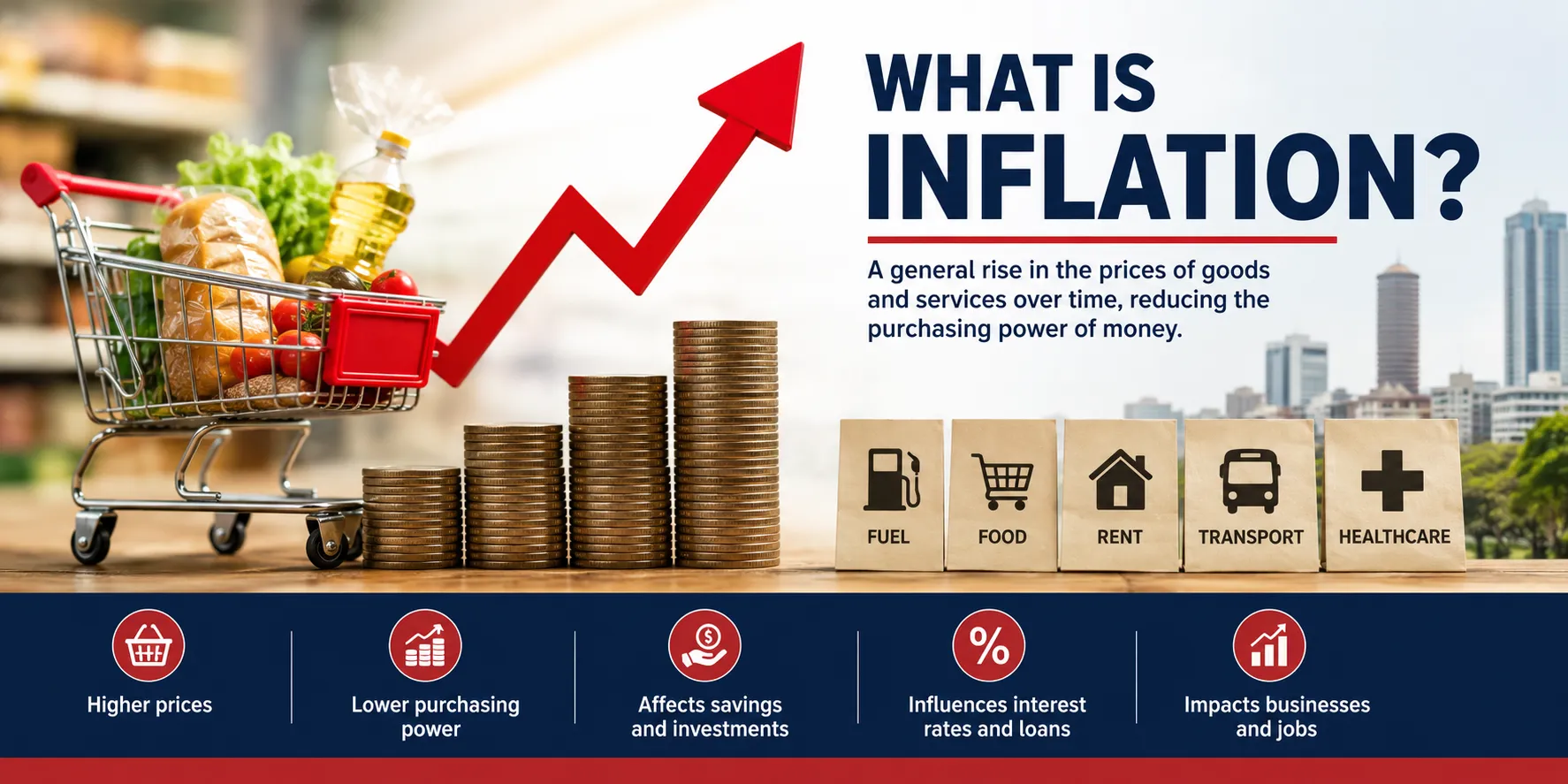
Hook: The Shopping Trip That Leaves You Wondering
You walk into your local supermarket with KSh 5,000, convinced it will comfortably cover the week's groceries. Milk, cooking oil, bread, sugar, vegetables, a few household essentials—you've bought these items countless times before.
Half an hour later, you're standing at the checkout, watching the total climb higher than expected. Something has to go back on the shelf.
If this sounds familiar, you're not imagining things. Many Kenyan households have noticed that the same amount of money buys fewer goods than it did a year or two ago. Even small daily expenses like bus fare, lunch, mobile data, or a cup of tea can quietly eat into your budget.
That gradual squeeze is one of the most noticeable effects of inflation.
What Inflation Means
Inflation simply refers to the general increase in prices over time. As prices rise, the purchasing power of money falls.
Think about it this way.
If a loaf of bread costs KSh 60 today but rises to KSh 70 next year, your KSh 60 no longer buys the same loaf. Your money hasn't physically changed, but its value in the marketplace has.
Inflation does not usually affect only one product. It often touches food, fuel, rent, transport, school supplies, electricity, healthcare, and many other everyday expenses.
Why It Matters
Many people assume inflation only affects governments, economists, or large businesses.
The reality is much closer to home.
Every salary, pension, savings account, and business budget feels the impact. Even if your income remains unchanged, rising prices quietly reduce what you can afford.
Someone earning KSh 50,000 today may discover that the same salary covers fewer household expenses after several years of persistent inflation.
That is why understanding inflation isn't just an economics lesson. It's a practical life skill.
Practical Breakdown
1. Your Grocery Bill Grows Without Buying More
Food is usually where most families first notice inflation.
Vegetables become more expensive after poor harvests. Cooking oil prices move with global markets. Bread, maize flour, sugar, and milk may all increase within months.
A family that previously spent KSh 15,000 each month on groceries may suddenly need KSh 18,000 or more without changing what they eat.
In practice, many households don't simply spend more. They adjust by switching brands, buying smaller quantities, reducing treats, or shopping at different markets.
2. Transport Costs Ripple Through Everything Else
Fuel prices affect much more than motorists.
When diesel or petrol becomes expensive, transport operators often increase fares. Businesses also pay more to move goods across the country, and those extra costs eventually appear on supermarket shelves.
Take a trader transporting vegetables from Eldoret to Nairobi. Higher fuel costs increase delivery expenses, making the final selling price higher for consumers.
Even someone who rarely drives can still feel the effect.
3. Rent and Housing Become Harder to Manage
Housing is often the biggest monthly expense.
Property owners may increase rent to cover higher maintenance costs, security expenses, insurance, or loan repayments.
For tenants, this leaves less money for savings or other priorities.
Some families respond by relocating to more affordable neighbourhoods or sharing accommodation longer than originally planned.
4. Savings Lose Buying Power
Many people feel good seeing the balance in their savings account remain unchanged.
Unfortunately, inflation doesn't leave savings untouched.
Imagine you save KSh 200,000 for five years while prices continue rising. If your savings earn less interest than the inflation rate, that money may buy significantly fewer goods when you finally use it.
The number in your account stays the same.
Its purchasing power does not.
5. Businesses Also Feel the Pressure
Inflation isn't only a household issue.
Small businesses face higher supplier costs, electricity bills, employee wages, packaging expenses, and transport charges.
Owners then face difficult choices.
Should prices increase?
Should profit margins shrink?
Should they reduce operating costs?
Anyone running a kiosk, restaurant, salon, or online business has probably faced this balancing act.
6. Fixed Incomes Feel the Biggest Pinch
Retirees, students receiving regular allowances, and employees whose salaries rarely change often struggle the most during periods of high inflation.
Their income remains predictable while expenses keep moving upward.
Someone receiving a pension may discover that monthly medical expenses, food, and transport now consume far more of their income than before.
Salary increases help—but only if they keep pace with rising prices.
7. Borrowing Can Become More Expensive
Inflation often influences interest rates.
When inflation remains high, lenders may charge more for loans, making mortgages, personal loans, and business financing costlier.
For borrowers, monthly repayments can become harder to manage.
Businesses planning expansion may postpone investment because financing costs have increased.
Reality Check
Economic textbooks often explain inflation using charts, percentages, and national statistics.
Life on the ground feels different.
One family may barely notice rising prices because their income has grown. Another household earning the same salary as three years ago may have completely changed its shopping habits.
There is also a common belief that inflation affects every product equally.
It doesn't.
Food prices might rise sharply while electronics remain relatively stable. Housing may become expensive in one town while another experiences slower increases.
Kenya has also experienced periods where global events—such as supply chain disruptions, fluctuating fuel prices, changing exchange rates, or drought—have pushed prices higher beyond local factors. Consumers usually care less about the economic explanation than the amount printed on the receipt.
Practical Takeaways
- Track monthly spending instead of relying on memory.
- Review subscriptions and recurring expenses every few months.
- Build an emergency fund for unexpected price increases.
- Compare prices across supermarkets, local markets, and wholesalers.
- Buy durable household items when prices are favourable rather than waiting for shortages.
- Increase your income where possible through additional skills, side businesses, or investments.
- Review your savings strategy to ensure your money continues growing over time.
- Revisit your household budget regularly because last year's spending plan may no longer reflect today's prices.
Common Questions and Misconceptions
Does inflation mean everything becomes expensive?
No. Prices rise at different speeds. Some products may barely change while others increase rapidly.
Is inflation always bad?
Not necessarily. Moderate inflation is considered normal in a growing economy. Problems usually arise when prices rise much faster than incomes.
Can one person stop inflation?
No individual controls inflation. What people can control is how they budget, save, invest, and make spending decisions.
Why does my salary increase still feel insufficient?
If your salary grows by 5% while living costs rise by 8%, your purchasing power has still declined.
Does keeping cash at home protect me from inflation?
No. Cash kept at home loses purchasing power just like money sitting in a low-interest account.
Conclusion
Inflation rarely announces itself dramatically. It usually arrives one receipt, one fuel purchase, one rent payment, and one grocery trip at a time.
The challenge isn't simply that prices rise. It's that many people continue budgeting as though yesterday's prices still exist.
The households and businesses that cope best are often those that review their finances regularly, adapt their spending habits, and make informed decisions instead of reacting after costs have already climbed.
Money management has always mattered. During periods of inflation, paying attention to where every shilling goes becomes even more valuable—not because it guarantees lower prices, but because it helps you make the most of the income you already have.


